
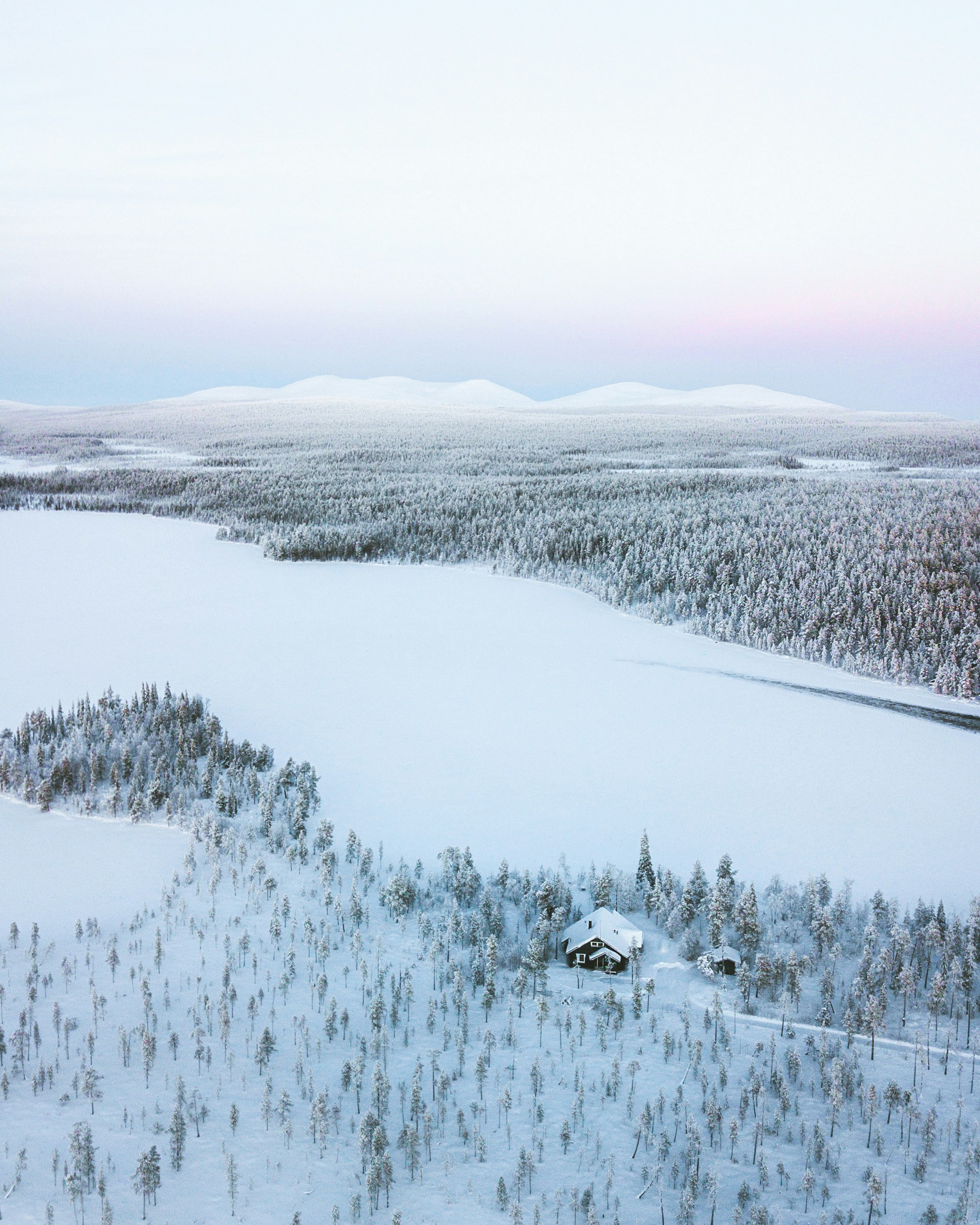
Finnish Lapland.
Photo: Taneli Lahtinen / Unsplash
Understanding Finnish State policy towards Europe’s only indigenous people
There is something disorienting about watching a documentary about indigenous rights and recognising the landscape as your own country.
Eatnameamet, directed by Sami filmmaker Suvi West, does not take place in a distant territory. It takes place in Finland. It addresses Finnish State policy towards the Sami people, the only recognised indigenous people of the European Union. And it raises questions that most people living in Helsinki, or anywhere in southern Finland, have rarely had reason to confront.
This is not a comfortable article. The documentary it discusses is not comfortable either. That discomfort is part of the learning.
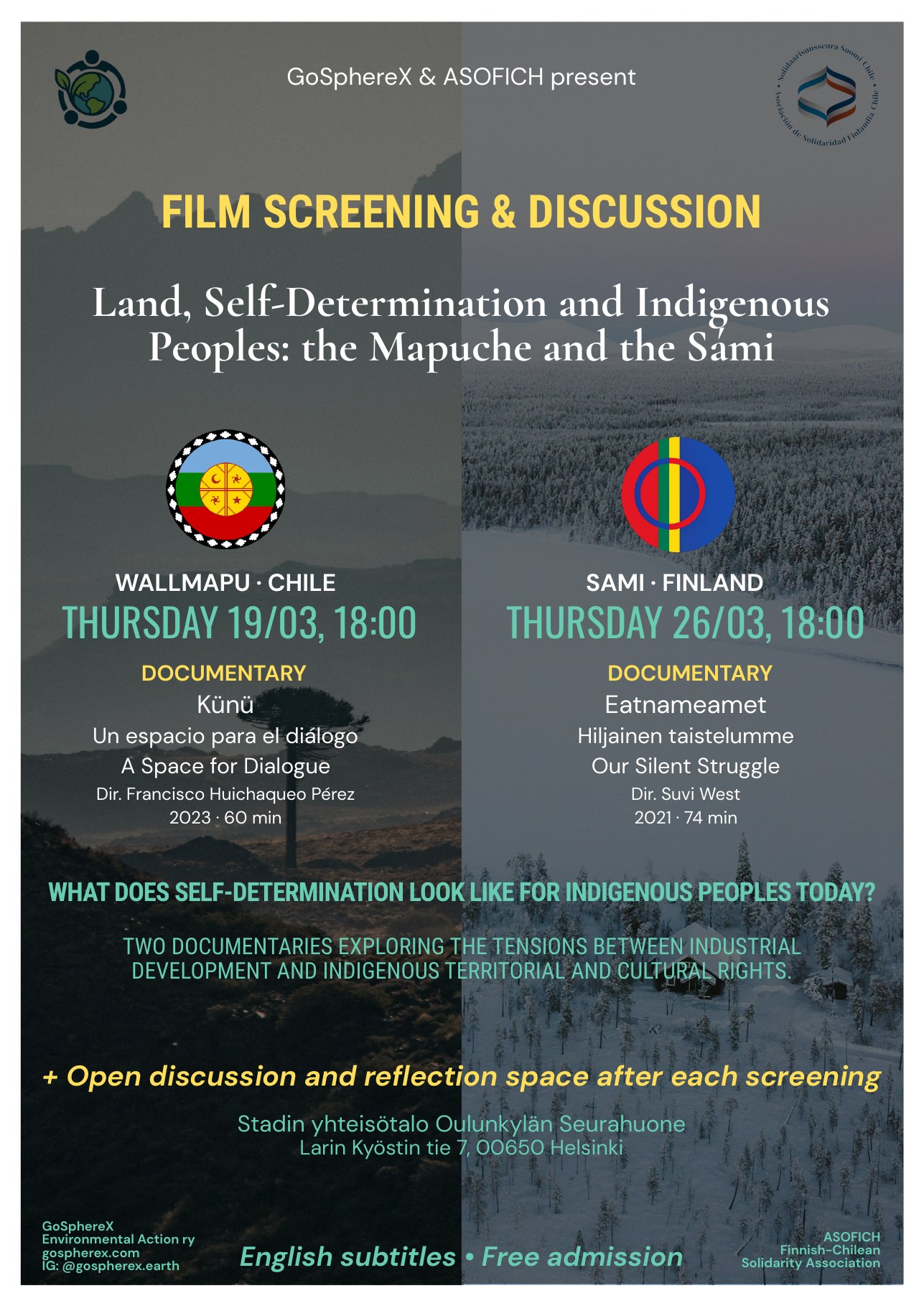
Who are the Sami people
The Sami people inhabit Sapmi, a territory that spans northern Norway, Sweden, Finland, and the Kola Peninsula in Russia. The total Sami population across Fennoscandia is approximately 80,000. In Finland, around 9,000 Sami live primarily in the municipalities of Utsjoki, Inari, and Sodankyla.
Reindeer herding is central to Sami culture and identity. Although only about 10 percent of Sami work directly in herding today, it remains culturally foundational: a practice through which language, knowledge, and relationship with the land are transmitted across generations.
Three Sami languages are spoken in Finland: Northern Sami, Inari Sami, and Skolt Sami. All three are classified as endangered.
Finland has a Sami Parliament, the Saamelaiskäräjät, based in Inari. It functions as an advisory body, but its decision-making power is limited. Finland has not ratified ILO Convention 169, which establishes standards for free, prior, and informed consultation with indigenous peoples on decisions affecting their territories.
The meaning of Eatnameamet
The title of the documentary means “our land” in Northern Sami. But the word carries a deeper layer: it is etymologically linked to the Sami word for mother. For the Sami, land is not a resource to be managed. It is a relationship, inseparable from language, culture, and identity.
This distinction is structural, not poetic. When Finnish State institutions discuss land use in northern Finland, they operate within frameworks of resource management, infrastructure, and economic development. When Sami communities discuss the same land, they are talking about the conditions for cultural survival.
The gap between these two understandings is not a misunderstanding. It is a structural mismatch between how institutions see territory and how indigenous peoples experience it.
Territorial pressures
Beyond policy, Sami communities face concrete territorial pressures that affect their daily lives.
Industrial forestry operations in northern Finland and Sweden affect reindeer lichen, the primary winter food source for reindeer herds. Logging fragments herding territories, making traditional routes increasingly difficult to maintain.
The Arctic Railway project, known in Finnish as Jäämerenrata, proposed a rail connection from Rovaniemi to the Arctic coast through Sami territories. The project was cancelled in its current form, but Sami organisations consider the cancellation a partial victory, not a permanent resolution. Such projects can be revived under different names or political conditions.
Mining interests continue to pressure ancestral lands. And the tourism industry in Lapland raises its own set of questions: the use of fake Sami clothing, inauthentic spiritual experiences marketed to visitors, and sacred sites visited without respect. The Sami Parliament has issued guidelines for tourism operators, but compliance remains inconsistent.
What the documentary reveals
Suvi West describes Eatnameamet as a collective cry for help. She chose not to centre the story on any single individual, because the experience she documents, forced assimilation, land loss, and cultural erasure, is not personal. It is a collective wound that affects the entire Sami people.
The documentary presents specific evidence: State policies that do not fully recognise Sami rights, international bodies that have raised concerns about Finland’s treatment of its indigenous population, and a Finnish public that is largely unaware of the situation. The UN Human Rights Committee has issued findings regarding Finland’s treatment of the Sami, particularly concerning the autonomy of the Sami Parliament’s electoral roll.
One observation from the director stays with you. West has spoken about fearing to speak Sami to her own children in the Helsinki metro. That detail, small as it may seem, says something about the depth of what this film addresses.
She also chose the documentary format deliberately: so that the political realities she documents could not be dismissed as fiction or imagination. The evidence is presented. The audience decides what to do with it.
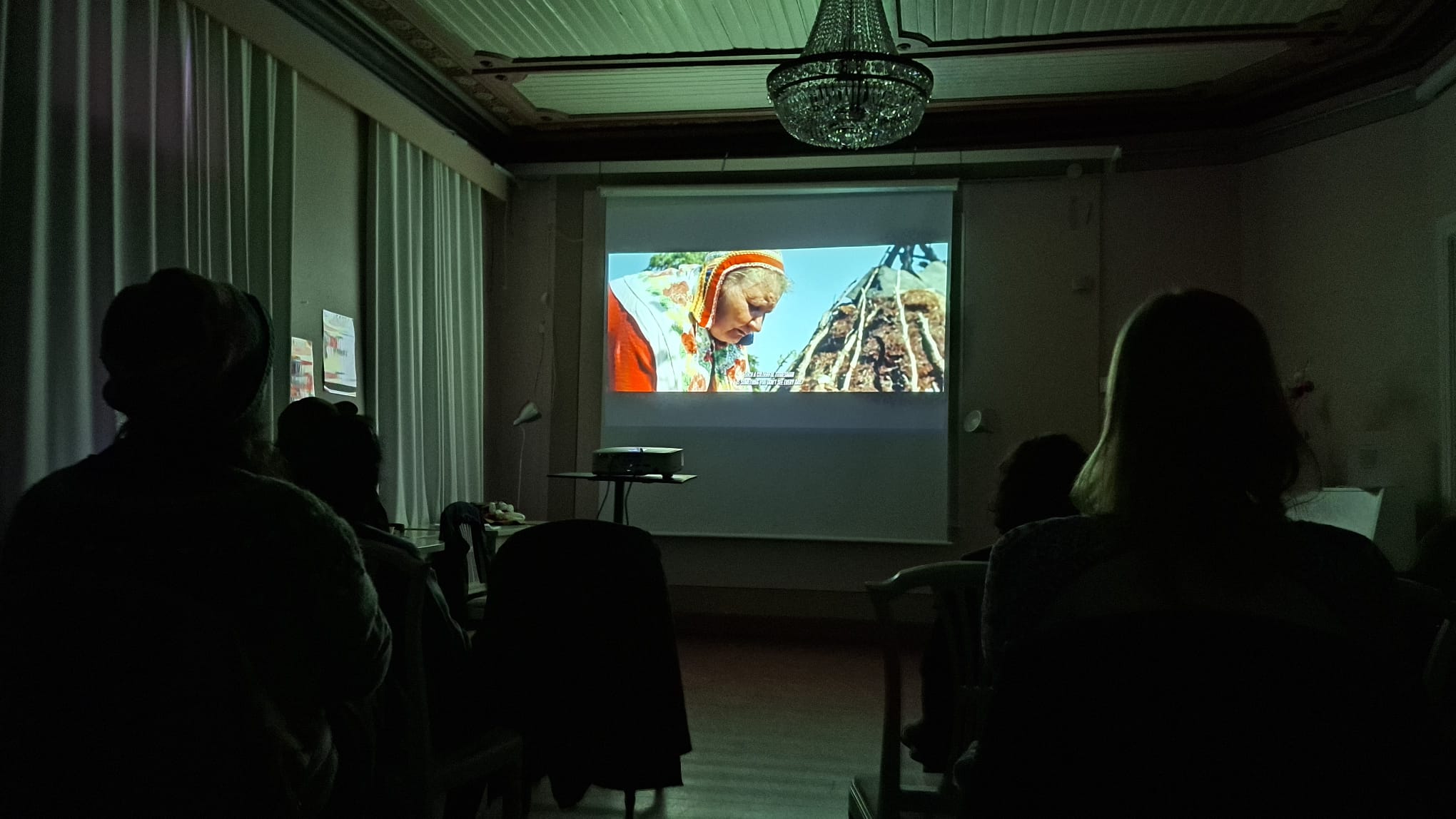
Screening of Eatnameamet at Stadin yhteisötalo Oulunkylän Seurahuone, Helsinki, 26 March 2026.
Photo: ASOFICH
The chain: land, integration, loss
One of the most important threads in the documentary, and in the discussion that followed our screening in Helsinki, is the chain that connects territory to cultural survival.
If indigenous communities lose access to their land, they lose their traditional way of life. That loss forces integration into the dominant society. And with integration comes the gradual erosion of language, cultural practices, and identity. The land is not just territory. It is the condition for everything else.
This pattern is not unique to the Sami. It appeared in the previous session of our documentary series, which examined the Mapuche case in Chile. Two indigenous peoples, separated by thousands of kilometres, facing the same structural dynamic: development models that treat indigenous territory and identity as obstacles to be managed.
The paradox of defence
To defend their territory, indigenous peoples must use the legal and institutional language of the systems that displaced them. They must claim ownership over something that their own culture does not believe can be owned.
This paradox was raised during the post-screening discussion by an attendee who had visited the Siida museum in Inari. The observation captures a tension that runs through both the Sami and the Mapuche cases: the tools available for resistance were designed by the same structures that created the need for resistance.
The recent amendment to the law governing who can vote in the Sami Parliament, removing non-Sami individuals from the electoral roll, represents a concrete step. But the broader question of how much real decision-making power the Sami Parliament holds remains open.
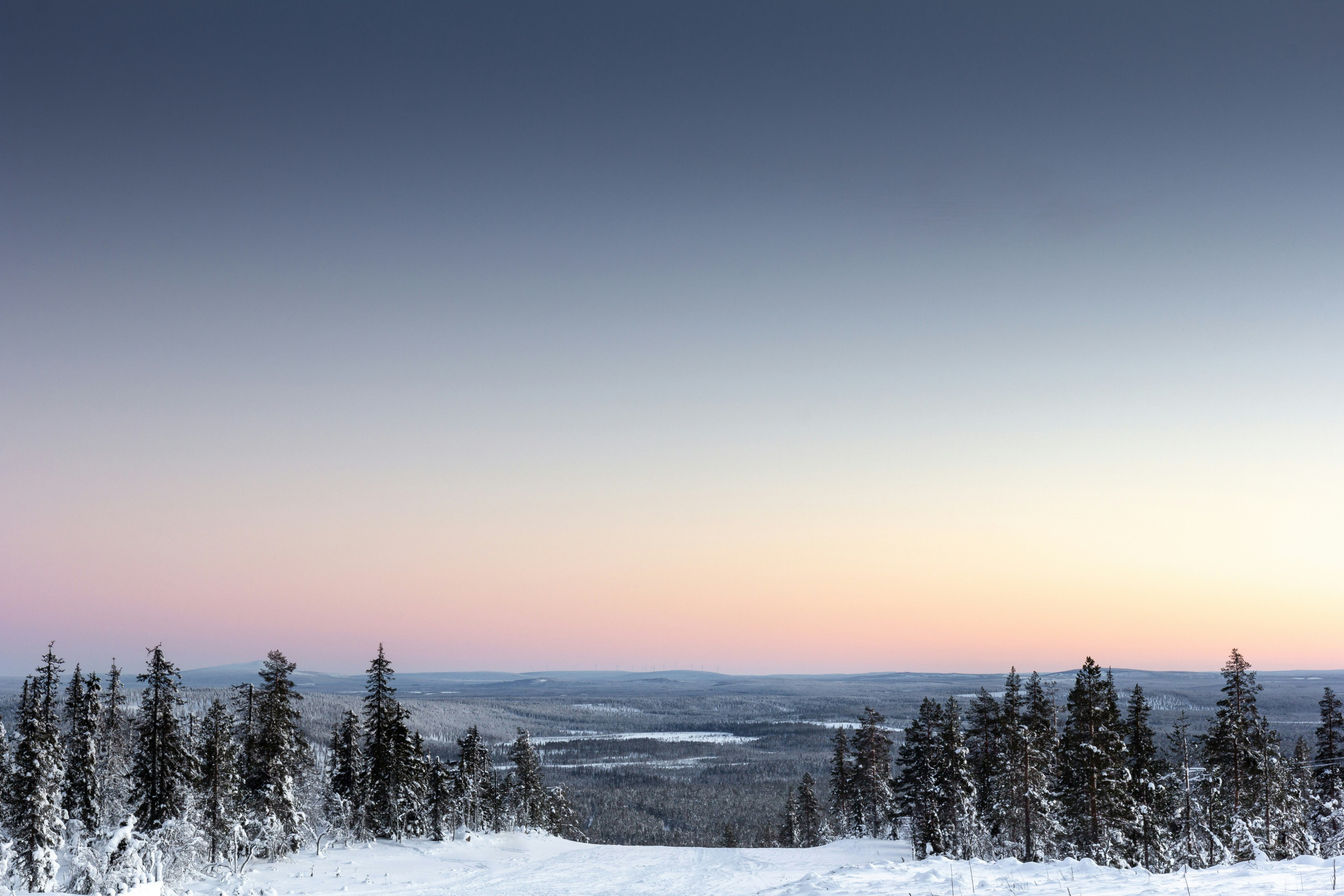
Winter landscape, Finnish Lapland.
Photo: Joakim Honkasalo / Unsplash
The European connection
For those of us living in Finland, or anywhere in Europe, the Sami case raises an uncomfortable question: how does a country known for its commitment to human rights, equality, and rule of law have unresolved questions regarding the rights of its own indigenous people?
The documentary does not resolve this question. It presents it. Whether we use the word colonialism, as the director does, or prefer a different framing, the evidence in the film stands on its own.
There is also a direct material connection. Europe is a consumer of products from territories where indigenous rights are contested: lithium from Chile’s Atacama, timber from Finnish Lapland, minerals from across the Arctic. The distance between where products are consumed and where their extraction affects communities is not only geographical. It is a gap in awareness.
Several attendees at our screening noted that Finns often know more about Native Americans than about the Sami. The documentary suggests that this is not accidental. It reflects how education and media shape what a society considers relevant about itself.
Why GoSphereX shares this context
GoSphereX is not an advocacy organisation. We do not take political positions on government policies or indigenous rights legislation. We present structural patterns and tensions because we believe that environmental accountability starts with understanding the systems that shape territories.
This screening was the third session of a documentary series organised by GoSphereX and ASOFICH (the Finnish-Chilean Solidarity Association) in Helsinki. Its first three sessions examined three cases where development models intersect with indigenous territories and community-led environmental action: lithium extraction in the Atacama, forestry in Wallmapu, and State policy towards the Sami in Finland.
Across these three sessions, a common structural pattern emerged: territories where economic or political models treat the land as a resource, and communities for whom that land is the foundation of identity, culture, and existence. The contexts differ. The historical circumstances are distinct. But the underlying tension is recognisable.
GoSphereX does not speak on behalf of indigenous communities. We present context and structural patterns to inform understanding. Environmental education is one of our core activities, and we believe that meaningful environmental action requires engaging with complexity rather than simplifying it.
About the documentary
Eatnameamet, Hiljainen taistelumme (Our Silent Struggle)
Director: Suvi West, 2021, approximately 74 minutes. Finnish and Northern Sami with English subtitles.
Church Media Foundation Prize and Audience Award at Tampere Film Festival 2021. Skabmagovat Prize 2024 awarded to Suvi West.
The documentary was produced over five years as a family effort with cinematographer Anssi Kömi.
Note
This article provides educational context for GoSphereX’s environmental education mission. Information is drawn from the documentary, publicly available sources, and discussions held during the screening event in Helsinki on 26 March 2026.
GoSphereX does not take political positions on Finnish indigenous policy. We do not speak on behalf of the Sami people. We present structural patterns to inform understanding.
Follow GoSphereX on LinkedIn or Instagram for updates on environmental accountability and community-led action.
Cover image at the top of this page: Reindeer in Inari, Finnish Lapland. Photo: Ximonic (Simo Räsänen), CC BY-SA 3.0, via Wikimedia Commons.