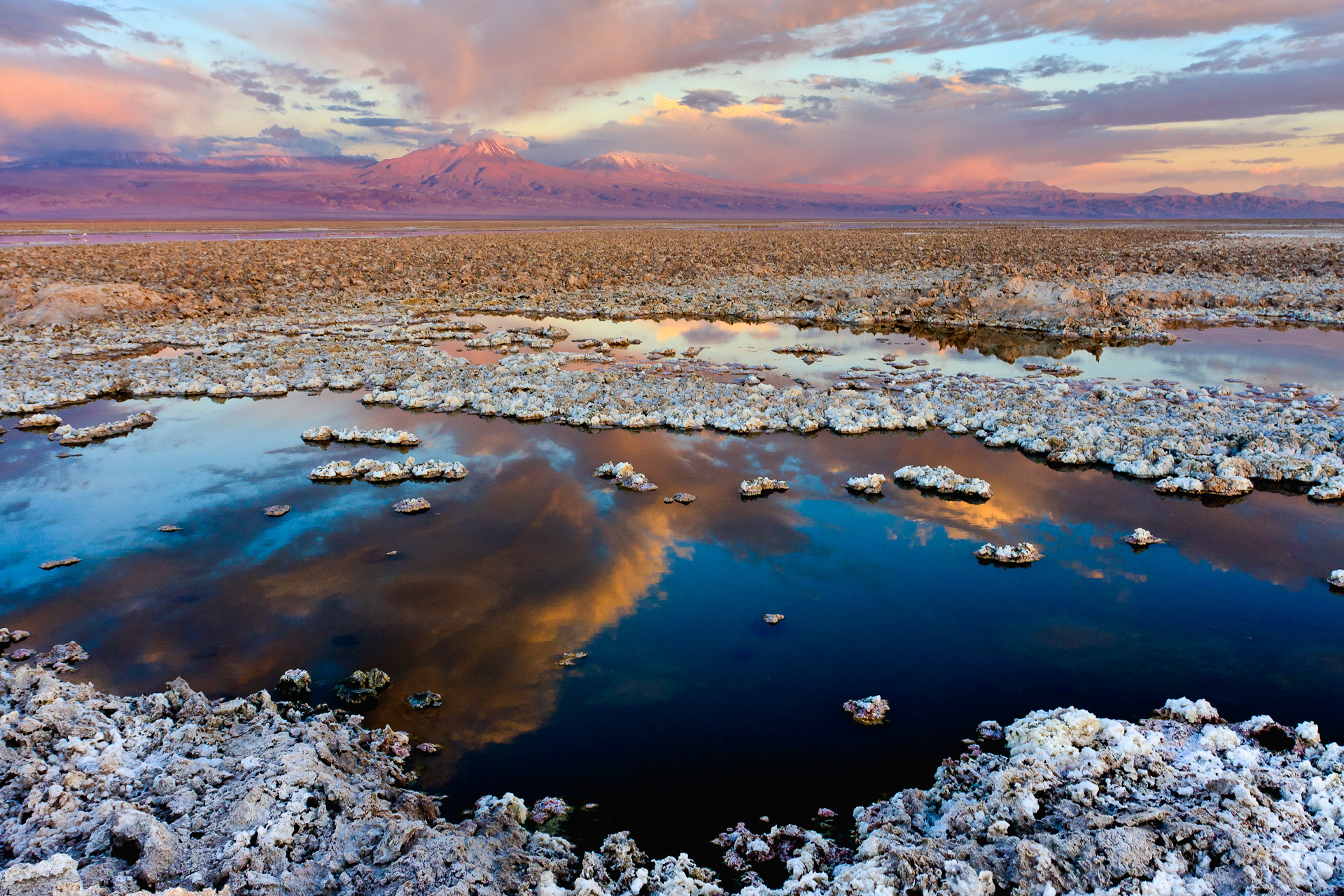
Salar de Atacama. Photo: Francesco Mocellin, CC BY-SA 3.0 via Wikimedia Commons
Understanding the tensions in Chile’s Atacama region
The Atacama Salt Flat in northern Chile sits at the center of one of the most complex tensions in the global energy transition.
On one side: lithium. Essential for electric vehicle batteries, energy storage systems, and the technologies driving decarbonization. Europe, the United States, and China are all competing to secure supply. On the other side: water. The Atacama is one of the driest places on Earth, and the communities that have lived there for thousands of years depend on water that is increasingly scarce.
This is not a simple story of good versus evil. It is a tension. And tensions require understanding, not just opinions.
Why lithium matters globally
Lithium is a critical mineral for the energy transition. According to the U.S. Geological Survey, approximately 88% of global lithium use goes to batteries, primarily for electric vehicles and stationary energy storage. Global mine production reached an estimated 290,000 metric tons in 2025, a significant increase from the previous year, driven by rising demand for battery materials.
Chile holds some of the world’s largest lithium reserves. The country’s production comes primarily from brine extraction in salt flats, a method with a lower carbon footprint than hard rock mining but higher water use. This distinction is central to the debate.
The demand for lithium is projected to continue growing as countries pursue electrification targets. The European Union is implementing strict traceability and sustainability regulations, including a Battery Passport requirement starting in 2027 and a Critical Raw Materials Act. These regulations mean that suppliers like Chile must demonstrate compliance with socio-environmental standards.
Chile’s evolving approach
Chile’s government has pursued a National Lithium Strategy centered on a public-private model led by state companies Codelco and ENAMI. The strategy aims to give the state greater control over lithium exploitation while balancing economic development, environmental protection, and community participation.
In February 2026, the government signed a Special Lithium Operation Contract (CEOL) for the Maricunga Salt Flat, Chile’s second most important lithium deposit. This contract involved a consultation process with indigenous Colla communities, resulting in eleven formal agreements. However, some indigenous groups have raised concerns about representation in the consultation process, illustrating the difficulty of achieving consensus in extraction territories.
The government has also announced the creation of a Protected Salt Flats Network, seeking to safeguard 10 high-Andean salt flats and lagoons in the Atacama region. This represents an attempt to balance extraction with conservation, though the long-term effectiveness of this balance remains to be seen.
The water question
The debate around lithium extraction in the Atacama is inseparable from the question of water.
Companies extracting lithium from brine argue that they are not using fresh water, but rather pumping saline brine from underground deposits. Critics, including scientists and indigenous communities, argue that the hydrological system is interconnected. Extracting brine, they contend, affects the overall water balance of fragile ecosystems that depend on a delicate equilibrium between freshwater, saltwater, and underground flows.
The Lickanantay people, also known as Atacameños, have inhabited these territories for more than 13,000 years. Their relationship with water is not only practical but cultural and spiritual. When extraction alters the landscape, it transforms more than hydrology. It transforms the lived experience of communities rooted in that territory.
The European connection
For consumers and policymakers in the Global North, these tensions are not distant abstractions. The batteries in electric vehicles, smartphones, and energy storage systems contain materials extracted from specific places. The environmental and social costs of that extraction often remain in those communities long after the resources leave.
The European Union’s evolving regulatory framework, including due diligence requirements and supply chain traceability, reflects a growing recognition that the energy transition must account for its own impacts. Whether these regulations will be sufficient to address the structural asymmetries between extraction territories and consumption markets remains an open question.
Why GoSphereX shares this context
GoSphereX is not an advocacy organization. We do not take a position for or against lithium extraction.
We share this context because the Atacama region, where these tensions play out, is the same region where GoSphereX supports its first pilot project: Vertientes de La Chimba Norte, a community-led wetland restoration initiative in Antofagasta, led by the local organization Raíces Endémicas.
Understanding the systems that shape a territory is part of environmental accountability. Local restoration does not happen in isolation. It happens within a context of water scarcity, economic pressures, policy decisions, and global supply chains. Making that context visible is part of what we do. We believe that accountability starts with understanding complexity, not simplifying it.
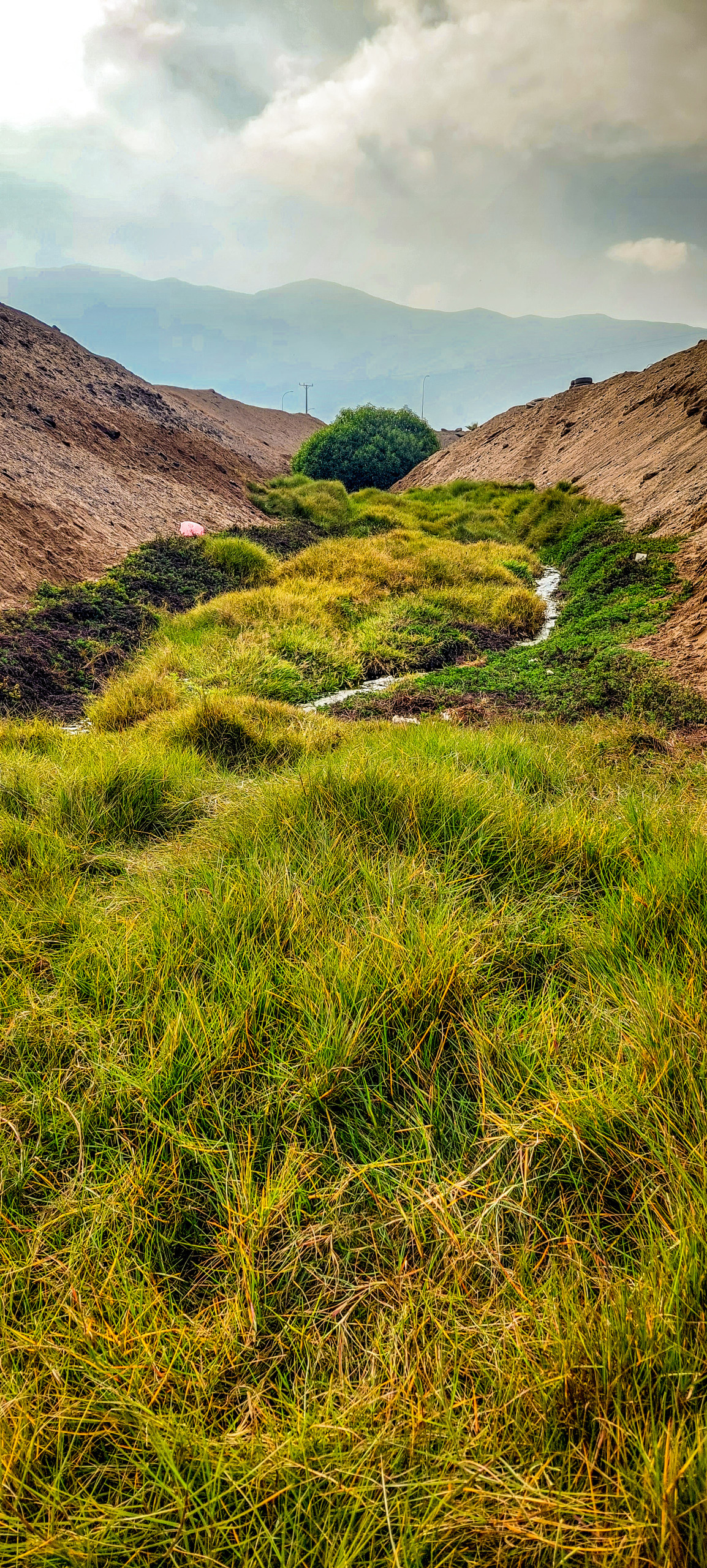
Wetland vegetation and a small water channel between arid slopes at Vertientes de La Chimba Norte. Photo: Carmen Serrano (Raíces Endémicas).
Note
This article provides educational context for GoSphereX’s environmental education mission. Data on lithium reserves, production, and policy is drawn from publicly available sources including USGS Mineral Commodity Summaries (February 2026), IEA reports, and Chilean government publications. GoSphereX does not take political positions on lithium extraction policy.
Follow GoSphereX on LinkedIn or Instagram for grounded analysis of environmental systems and local action.