
The question from our screening of El Lamento del Mar, answered with sources.
At our screening of El Lamento del Mar in October, someone asked whether fish farming in Finland is any different from what the film shows in Norway and Chile. Nobody in the room knew, so we promised to find out. This is what the official numbers say.
The short answer
Finland farms very little salmon for food. What it farms is rainbow trout. In 2025, Finland produced nearly 18 million kilos of food fish, and 17 million of them were rainbow trout: about 95%. European whitefish came second, with 0.8 million kilos. In the official statistics, salmon appears only as young fish raised for restocking, not as food fish.
The same method, at a much smaller scale
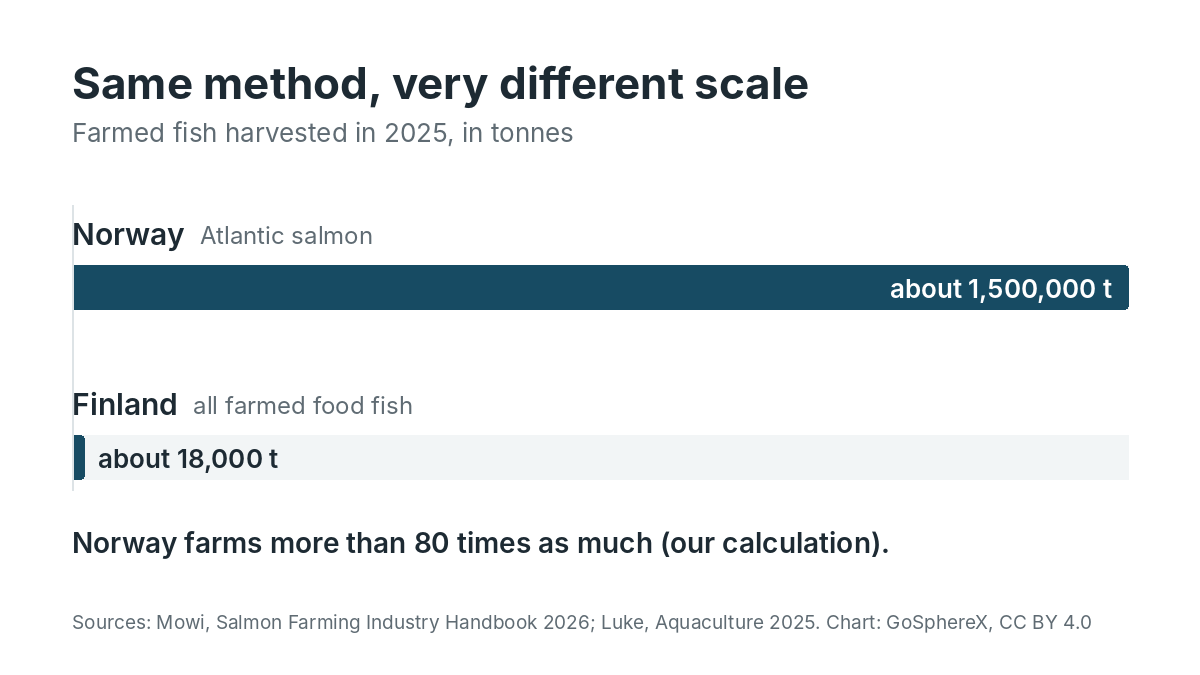
The basic method is the same one the film shows: fish raised in net pens in the sea. About three quarters of Finland’s food fish is farmed in marine areas, and half of that in the Åland Islands. The difference is scale. Norway harvested about 1.5 million tonnes of Atlantic salmon in 2025. Finland’s entire food fish production was about 18 thousand tonnes, so Norway farms more than 80 times as much (our calculation from Mowi and Luke figures).
Permits and nutrients
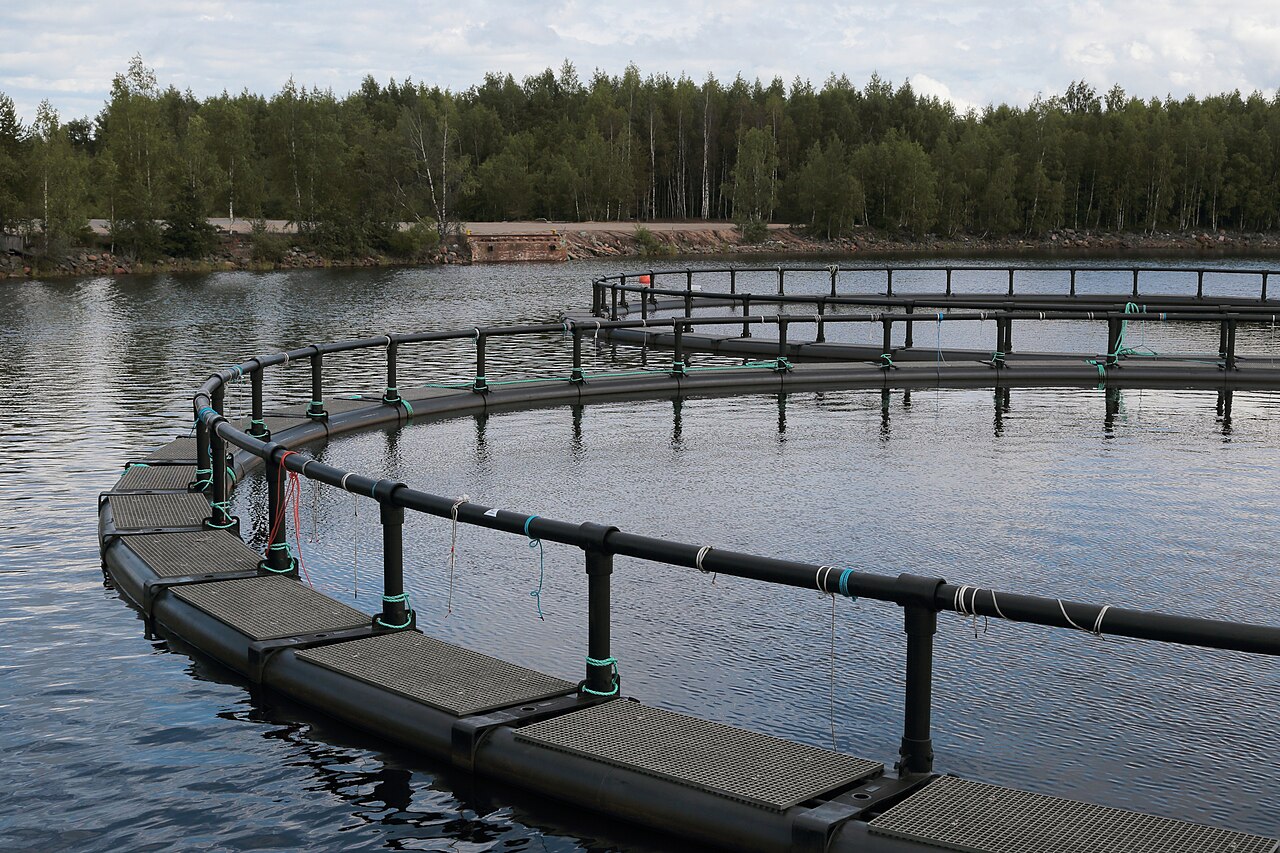
Fish farms in Finland need an environmental permit, and new farms are placed according to a national aquaculture location plan. The main concern in the Baltic Sea is nutrients: fish farms release nitrogen and phosphorus, mostly from feed. According to Itämeri.fi, the nutrient load per kilo of fish has fallen by 60 to 70% over recent decades.

Feed from the Baltic
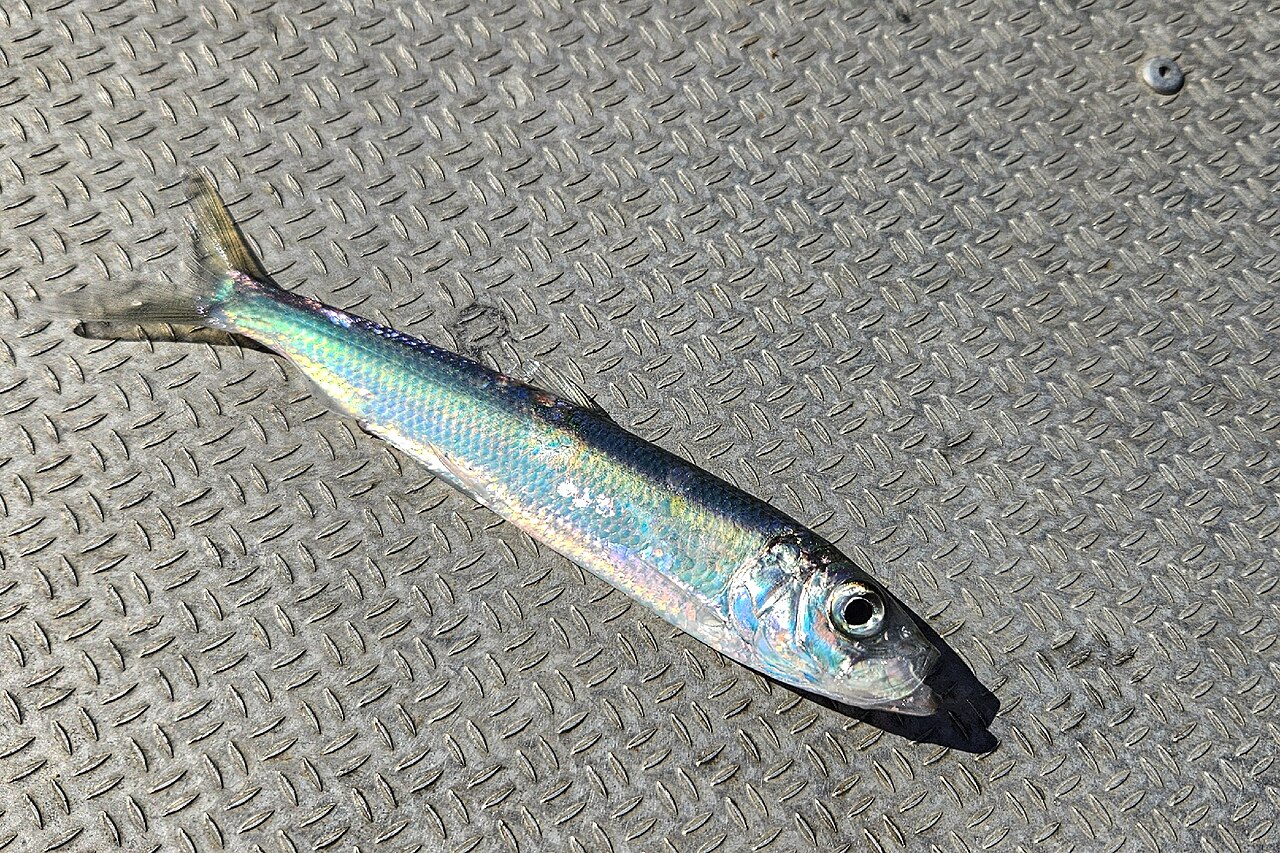
Part of the feed used in Finland is made from Baltic herring and sprat caught in the same sea. The idea is to recycle nutrients that are already in the Baltic instead of bringing them in from elsewhere. One feed producer, Raisioaqua, reports that in 2017 and 2018 its Baltic feed removed more phosphorus from the sea than the whole Finnish fish farming industry added, a figure published by Sitra.

What people in Finland actually eat
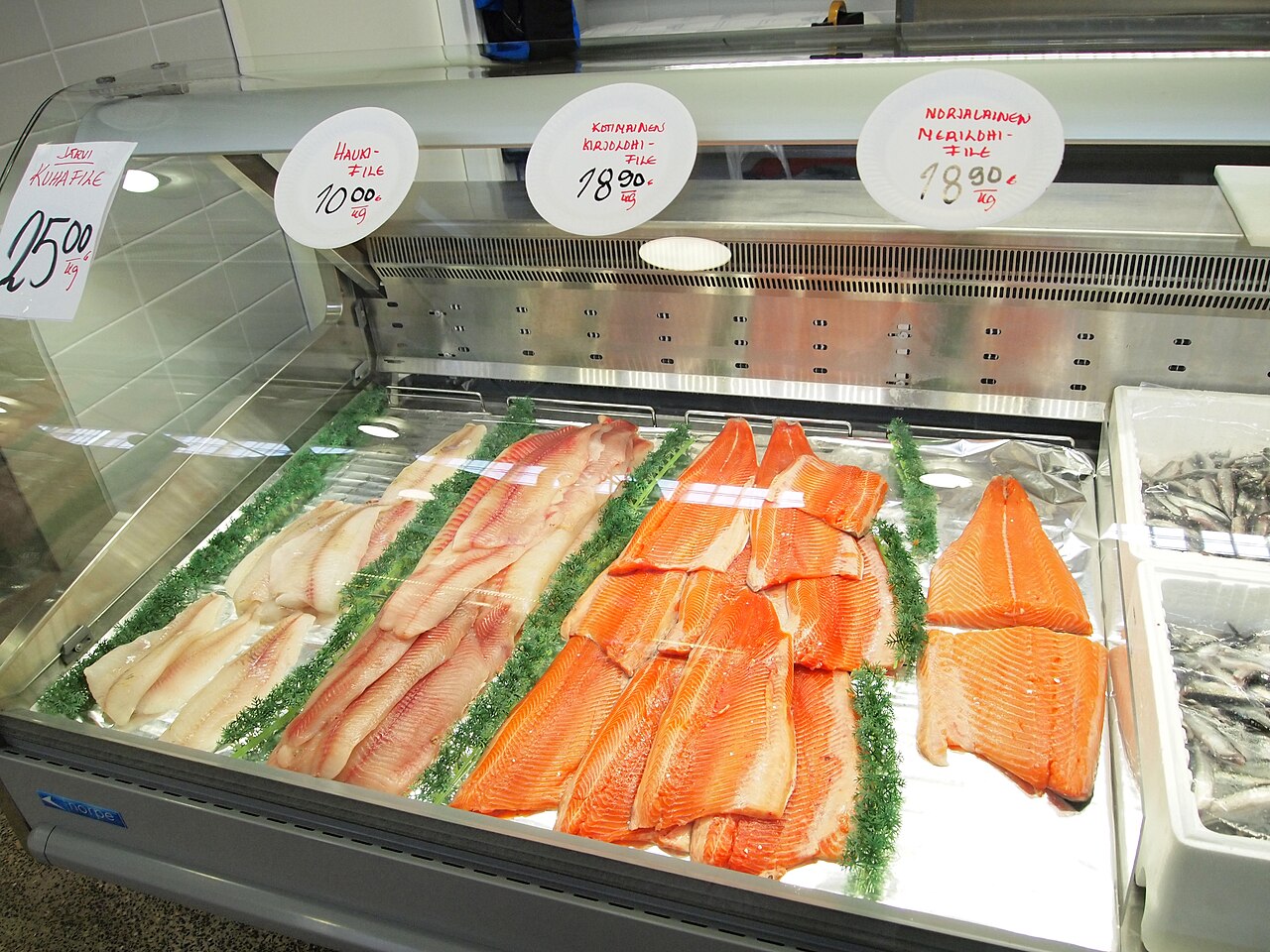
Most of the salmon eaten in Finland is imported, according to Itämeri.fi more than 70%, mainly farmed in Norway. In 2024, people in Finland ate about 2.6 kg per person of imported farmed salmon and about 1.6 kg of domestic rainbow trout (Luke). The two figures are measured differently, product weight for imports and fillet weight for domestic fish, so they are not fully comparable. Even so, the salmon on Finnish plates comes mostly from the industry the film describes.

What this does not tell us
These figures describe how much is farmed, where and under which rules. They do not tell us how each farm performs, and we are not in a position to rate them. The sources are official statistics, public information services and, in one case, a company. We cite them as they are.
GoSphereX takes no position for or against fish farming. This piece answers a question from our screening of El Lamento del Mar.
Follow GoSphereX on LinkedIn or Instagram for updates on environmental accountability and community-led action.
Sources: Luke, Aquaculture 2025 and Fish consumption 2024; Mowi, Salmon Farming Industry Handbook 2026; Itämeri.fi, Fish farming; Sitra, Fish fed local ingredients reduces nutrient load in the Baltic Sea.
Cover image at the top of this page: fish farming in the Archipelago Sea, Finland. Photo: kallerna, CC BY-SA 4.0, via Wikimedia Commons.
